
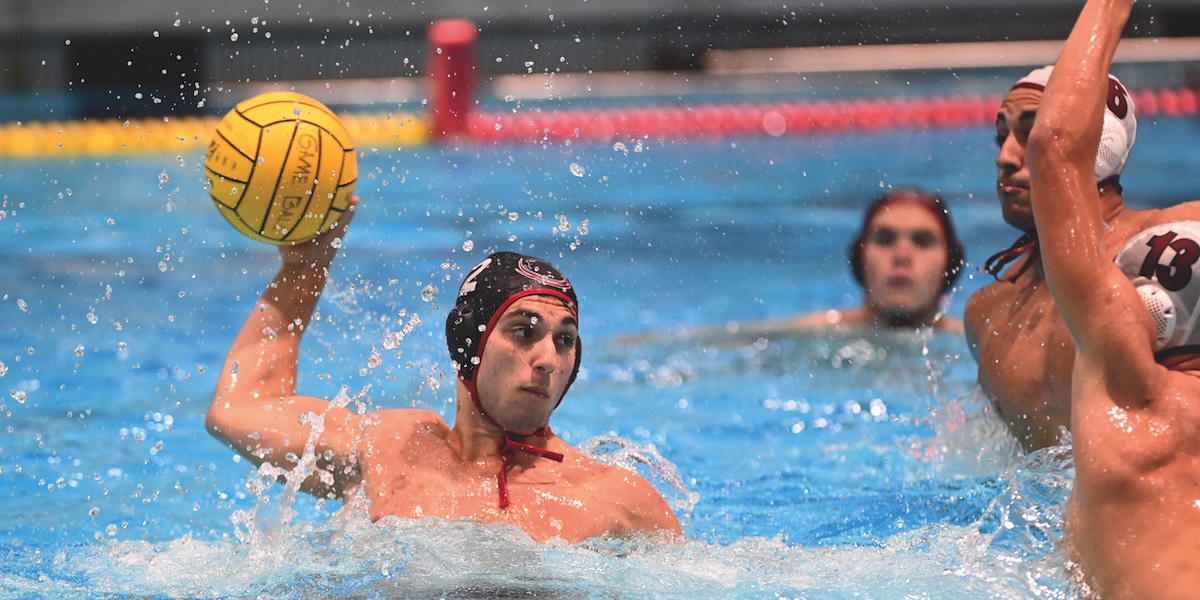
WATER POLO MAKES BIG SPLASH
By HQ Staff
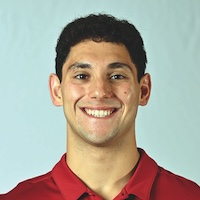
Ivatorov
In 2024, young men from MIT, previously affiliated with Theta Tau chapter, sought an opportunity to associate with a more traditional, rather than academic, fraternity. Led by Michael Rini and Adam Ivatorov — and supported by and supported by the alumni board and Jack Debaugh, colony president — they went through a rigorous six-stage interview process that began with more than 400 national fraternities.
“Narrowing it down through structured evaluations of organizational fit, we discovered Phi Psi in the early fall, connected in December, and officially voted to join in February 2025,” Ivatorov explained.
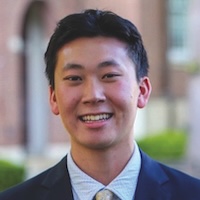
Hahn
During the process, Ivatorov spoke to Andrew Hahn Johns Hopkins ’23, then president of Maryland Alpha, to find out about the benefits of Phi Psi.
“Adam got in contact with me through one of our brothers, who played water polo with him when they were growing up,” Hahn said. “Given that our schools have very similar academic backgrounds and that many of our members/prospective members were on the water polo team, we agreed that it would be a great fit — and cool connection.”
After talking with several chapter leaders from not only Johns Hopkins, but also Penn and Stanford, Ivatorov found them all engaging, thoughtful and clearly proud of their chapters’ relationships with national headquarters.
“While Andrew wasn’t on the water polo team himself, he mentioned attending our Hopkins vs. MIT water polo game and even said, ‘Hey, you’re cap No. 2, right? I remember you,’” Ivatorov said.
That moment stood out to Ivatorov because it reflected a sense of connection that Phi Psi has across the country.
“While our chapters are pretty different, we have a similar bond between people who take genuine interest in one another.” he said. “Experiences like that reinforced our sense that Phi Psi wasn’t just a national organization but a brotherhood that extends across individual campuses.”
A few of the MIT Colony members and water polo teammates shared their sentiments about the experience of fraternity and the sports connection.
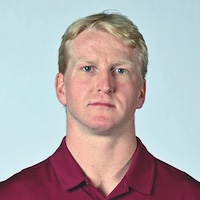
Lundh
Rick Lundh:
The rivalry between the Johns Hopkins and MIT water polo teams has been strong since our first matchup back in the fall of 1981. When we began our affiliation process and learned that many members of the Johns Hopkins team were brothers in the Maryland Alpha chapter, our team saw an opportunity to build a connection that extended beyond competition in the pool.
Last summer, while I was in Boston working as a research associate, I happened to meet a player from the Hopkins team. It struck me how different this interaction felt compared to my freshman and sophomore years. He wasn’t just a competitor I’d see once or twice a season. He was a fellow Phi Psi, and through that shared bond, our long-standing rivalry took on a new dimension. What had once been just competition became camaraderie, and I’m fortunate now to call him a friend, something I credit entirely to our Fraternity.
This experience reminded me that what unites us as members of Phi Kappa Psi (intellect, integrity, friendship, service and leadership) extends well beyond our individual chapters. Even though the brothers of Maryland Alpha may be our opponents in the pool, we are united by these same principles and by our commitment to being men of character.
Gill
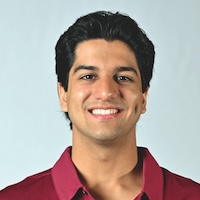
Armaan Gill:
Being in Phi Psi makes the word “brother” come to life. I genuinely think of my brothers as if they were my biological brothers. Being in a fraternity, especially at a demanding school like MIT, makes me incredibly close with some of my brothers. It differs from being on the water polo team because we are only practicing for a few hours out of the day together. On the other hand, I live with my fraternity brothers. The connections you make are lifelong and some of the strongest relationships you will ever have.
Kearns
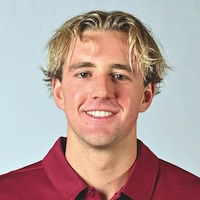
Kieran Kearns:
1. Being in a fraternity is a lot like being on a water polo team. In both, I’ve learned that communication is everything — people can’t read your mind, so setting clear expectations and goals is crucial for success. Both also create a strong sense of togetherness. Spending time with the same group every day, whether in the house or at practice, builds a bond that’s hard to replicate anywhere else.
Water polo and Phi Psi are two of the biggest parts of how I identify on campus. The main difference comes from their goals: I play water polo for the competitive and physical challenge, while I’m involved in Phi Psi for the social connection, community and service opportunities.
2. Playing water polo taught me how much success depends on everyone buying into a shared goal — you win when people trust each other and put the group first. That same mindset drives our colony as we work toward chartering. Everyone knows that it takes commitment from all of us, whether that’s showing up for events, recruiting or supporting each other day to day regardless of the difficulties of MIT coursework.
Phi Psi’s values of service, integrity and brotherhood really align with that team mentality. Just like on a team, it’s about putting others before yourself and building something that lasts beyond any single season or class year. That’s what motivates me personally — helping create a chapter where people genuinely have each other’s backs and take pride in what we’re building together.
In a mid-December 2025 announcement, Adam Ivatorov and Caspar Lightner of the MIT water polo team were named All-Americans by the Association of Collegiate Water Polo Coaches (ACWPC). This is the 11th-straight year the Engineers have had at least two All-Americans. Ivatorov earned second team honors, while Lightner was named an honorable mention. For Johns Hopkins, Phillip Long secured an All-America selection with an honorable mention nod.
Pooled Resources
According to water polo team rosters on the respective schools’ websites, 16 players are MIT Colony members and 11 are from Maryland Alpha.
MIT ENGINEERS
Josh Woren
Armaan Gill
Adam Ivatorov
Jackson Kay
Caspar Lightner
Kush Khamesra
Kunal Rajadhyax
Andras Beleznay
Kieran Kearns
Rick Lundh
Avi Narula
Derek Schaffer
David Ranaudo
Ethan Kim
Victor Perez
William Ewald
JOHNS HOPKINS BLUE JAYS
Chris Poisler ’24
Owen Bartlett ’24
Max Blecher ’24
Quint Steffey ’24
Alec Baker ’24
Ethan Babel ’24
Jason Mihalopoulos ’25
Gavin Brooke ’24
Phillip Long ’25
Andrew Lee ’25
Daniel Palfi ’24